
Are you looking for fun vocabulary games for students that make learning new words enjoyable?
Then you’re in the right place!
Learning vocabulary is an important part of a student’s English language development. It helps them express their thoughts, understand what they read, and communicate with greater confidence. But learning new words doesn’t always have to involve textbooks, worksheets, or memorising meanings.
With a few fun English vocabulary games, you can make learning new words an exciting experience for your students. These activities offer fun ways to improve vocabulary while helping children explore new words, understand meanings, and express themselves more confidently.
Whether you’re a teacher preparing your next classroom lesson or a parent looking for vocabulary activities for children at home, the following six games are worth trying.
So, let’s begin!
1. Word Association: One Word Leads to Another!
Let’s start with a game that gets your students thinking almost immediately!
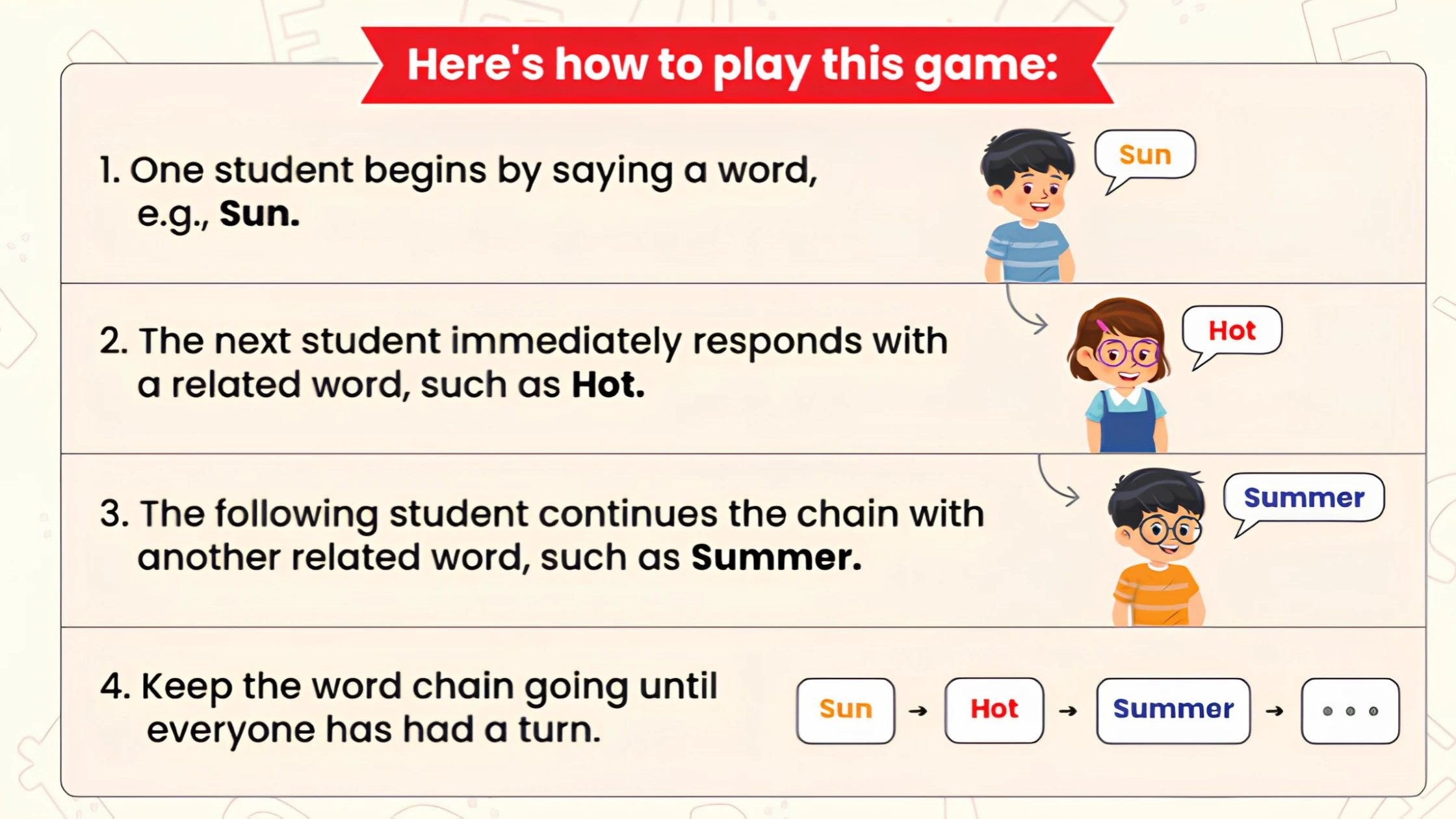
This is a fun vocabulary game in which students associate words based on their meanings or connections. Word Association is a great way to build on students’ existing knowledge and help them discover new words through the ones they already know.
For example, if you say Sun, they might say Summer, while others might think of Light or Heat. It’s fascinating to see how differently students make these connections!
You could also introduce different categories, such as animals, food, nature, and transport, and encourage students to come up with words associated with each category. This makes it one of the most adaptable word games for students to use in the classroom.
Skills developed: Vocabulary building, listening, quick thinking, and critical thinking.
2. Vocabulary Bingo: Learn Words and Play to Win!
Bingo gets even more exciting when students have to recognise the right words to win!
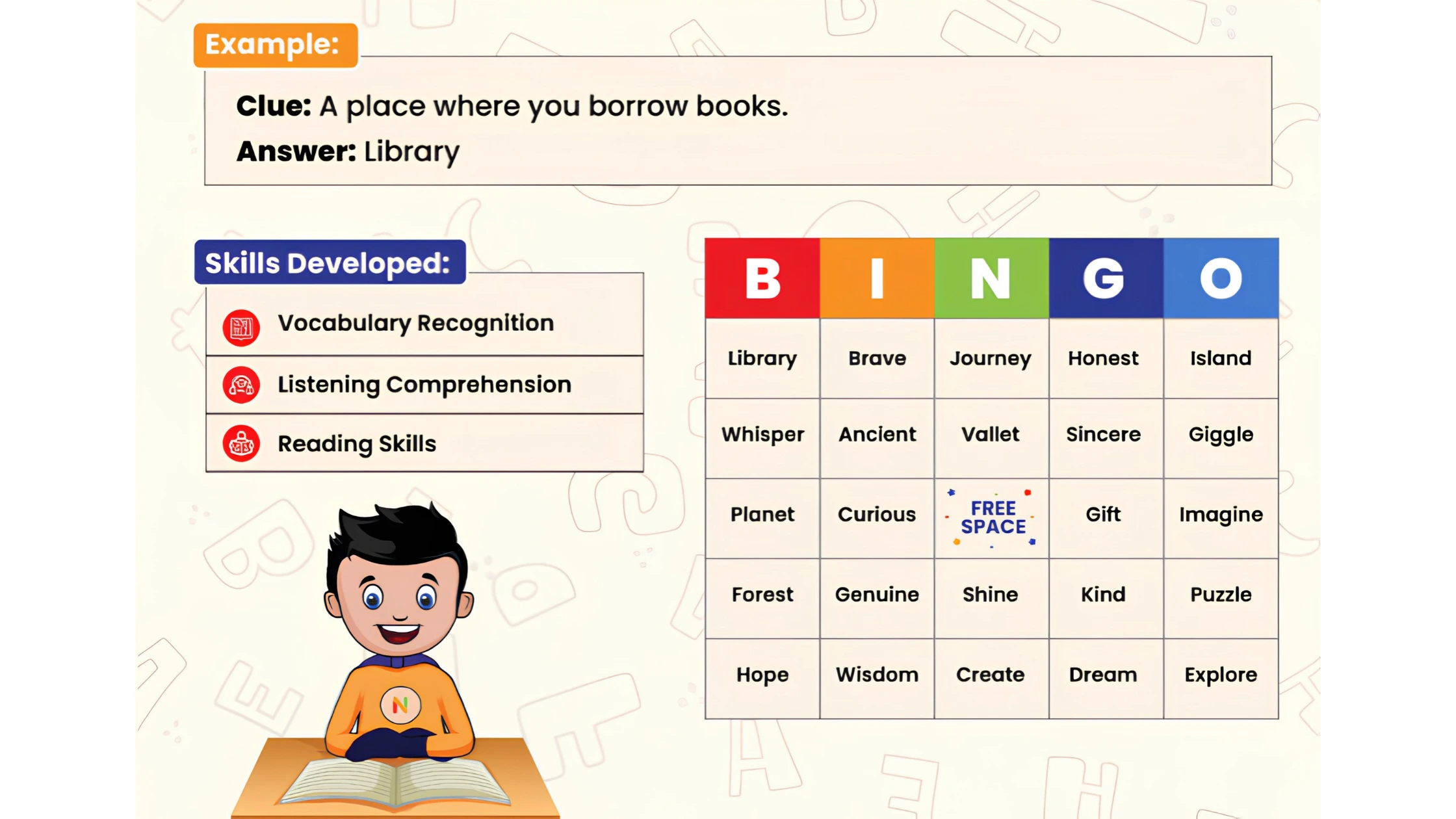
With Vocabulary Bingo, students can test their word knowledge by matching words with their definitions or clues. Each clue gives them a chance to think, listen, and find the right word.
Vocabulary Bingo turns vocabulary revision into a fun activity. You can use this resource to play Bingo with your students using words from your current lessons.
What students learn: Word recognition, listening, and reading skills.
3. Guess the Word: Put Those Thinking Caps On!
Here’s a game that can intrigue your students and encourage them to think about the relationships between words and their meanings!
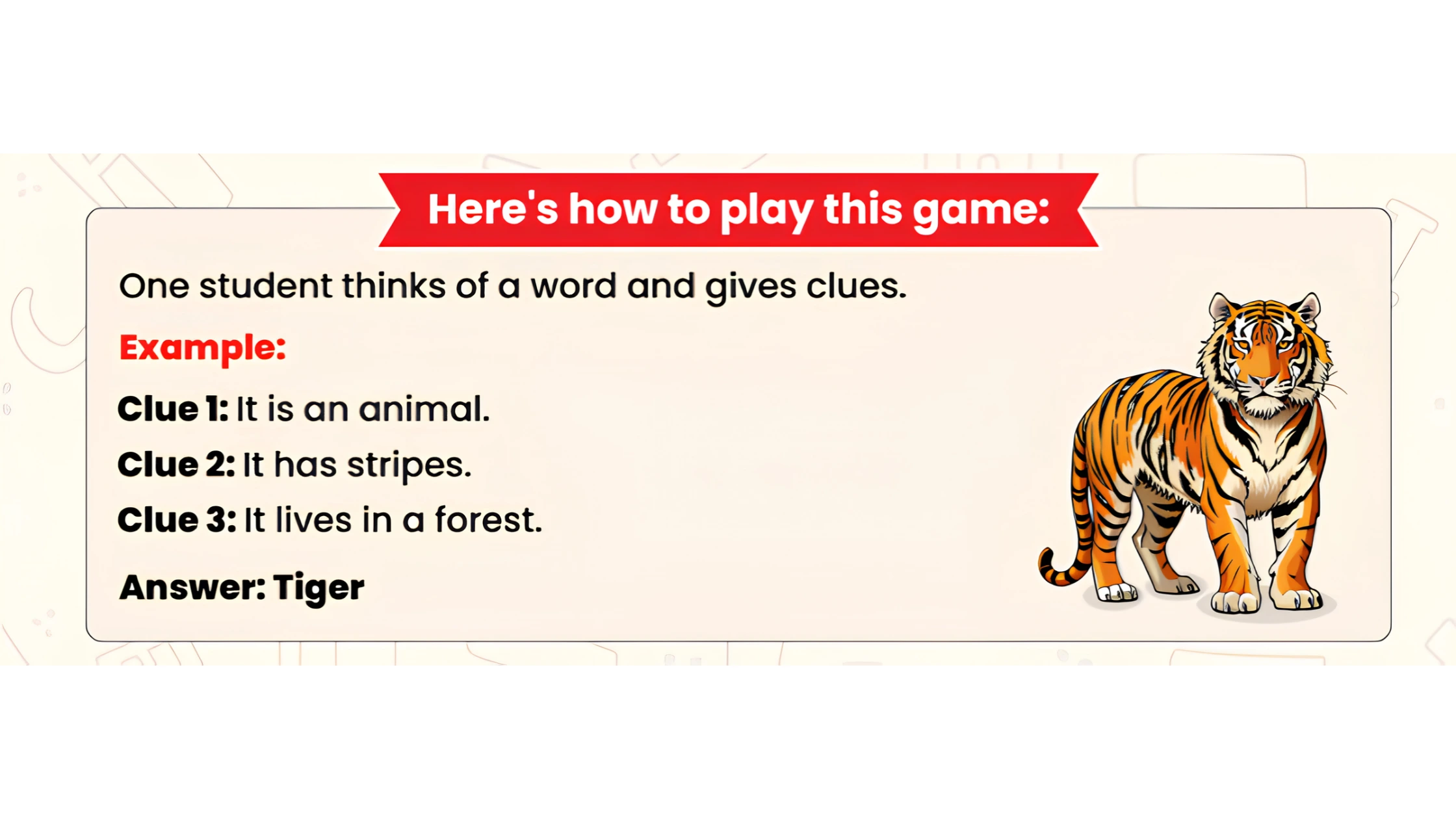
Guess the Word invites children to solve a little mystery using the clues they are given. Students will have to use their listening and reasoning skills to figure out which word you are thinking of.
For example, clues about an animal with stripes that lives in the wild might lead students to guess Tiger. As they become familiar with the game, you can encourage them to come up with their own clues and challenge their classmates.
This is also a wonderful opportunity to help your students practise describing things in their own words. After all, knowing the meaning of a word is one thing, but being able to explain it is quite another!
Skills developed: Descriptive speaking, logical thinking, speaking, and listening skills.
4. Hot Potato: Keep the Words Coming!
If you’re looking for a fun word game that involves more movement than simply standing in a circle, this is the game for you!
This lively game combines music, anticipation, and quick thinking. Students never quite know when their turn will come, which makes the activity exciting and keeps them involved.
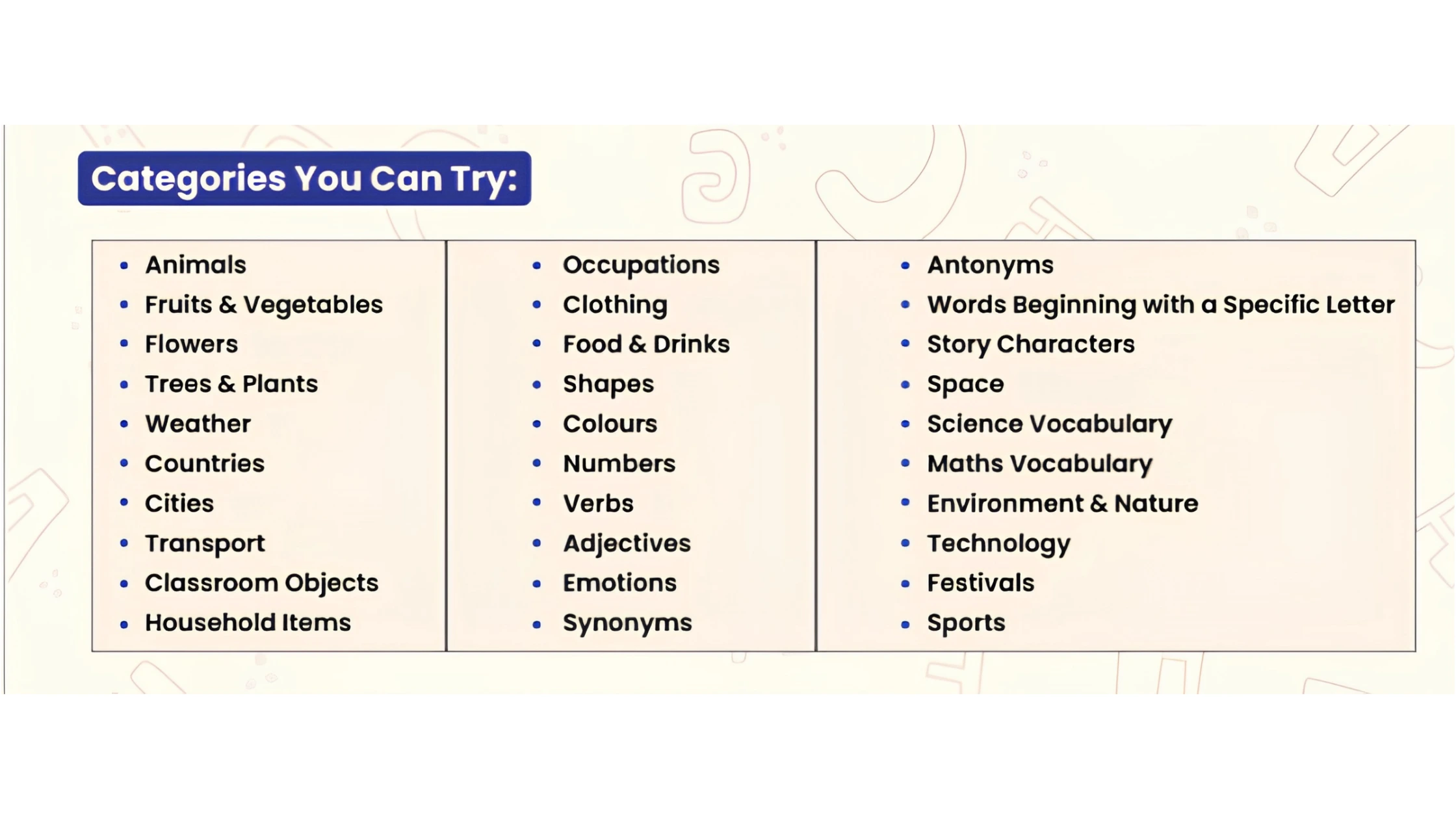
You can introduce categories for students to name, such as animals, fruits, and vegetables. Alternatively, you can use this game to encourage students to recall words they already know.
It’s also a great way to encourage shy students to participate in speaking activities and practise their speaking skills in a less intimidating environment.
Skills practised: Quick recall, speaking, listening, and teamwork.
5. Story Building Game: Let Your Students’ Imagination Take Over!
Children have wonderful ideas when they’re given the chance to be creative. Why not use that imagination to help them learn new words, too?
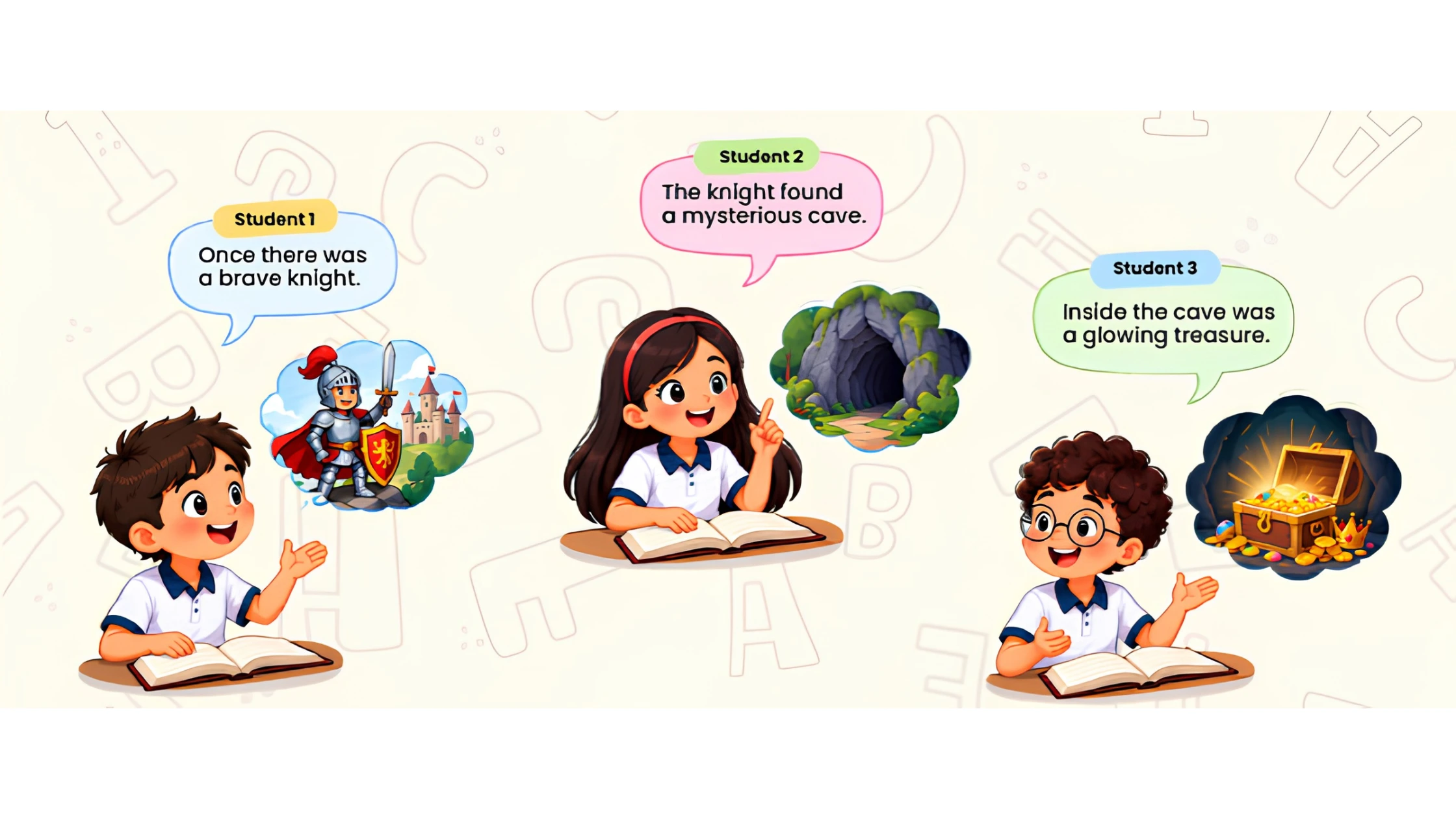
The Story Building Game encourages students to come together and create their own story using their imagination. One student could start by introducing a brave knight, while another could add a mysterious cave, and yet another could imagine a hidden treasure!
Before you know it, the class will have created a story of their very own!
In addition, students get to use vocabulary words in context instead of simply learning their definitions. This activity also allows students to practise using descriptive words, exploring challenging vocabulary, and forming sentences.
It’s a great way to bring vocabulary learning and creativity together in one engaging activity.
Skills developed: Vocabulary, creative writing, grammar, sentence structure, and collaboration.
6. Word Treasure Hunt: Turn Vocabulary Practice into an Adventure!
Who says learning new words has to be boring?
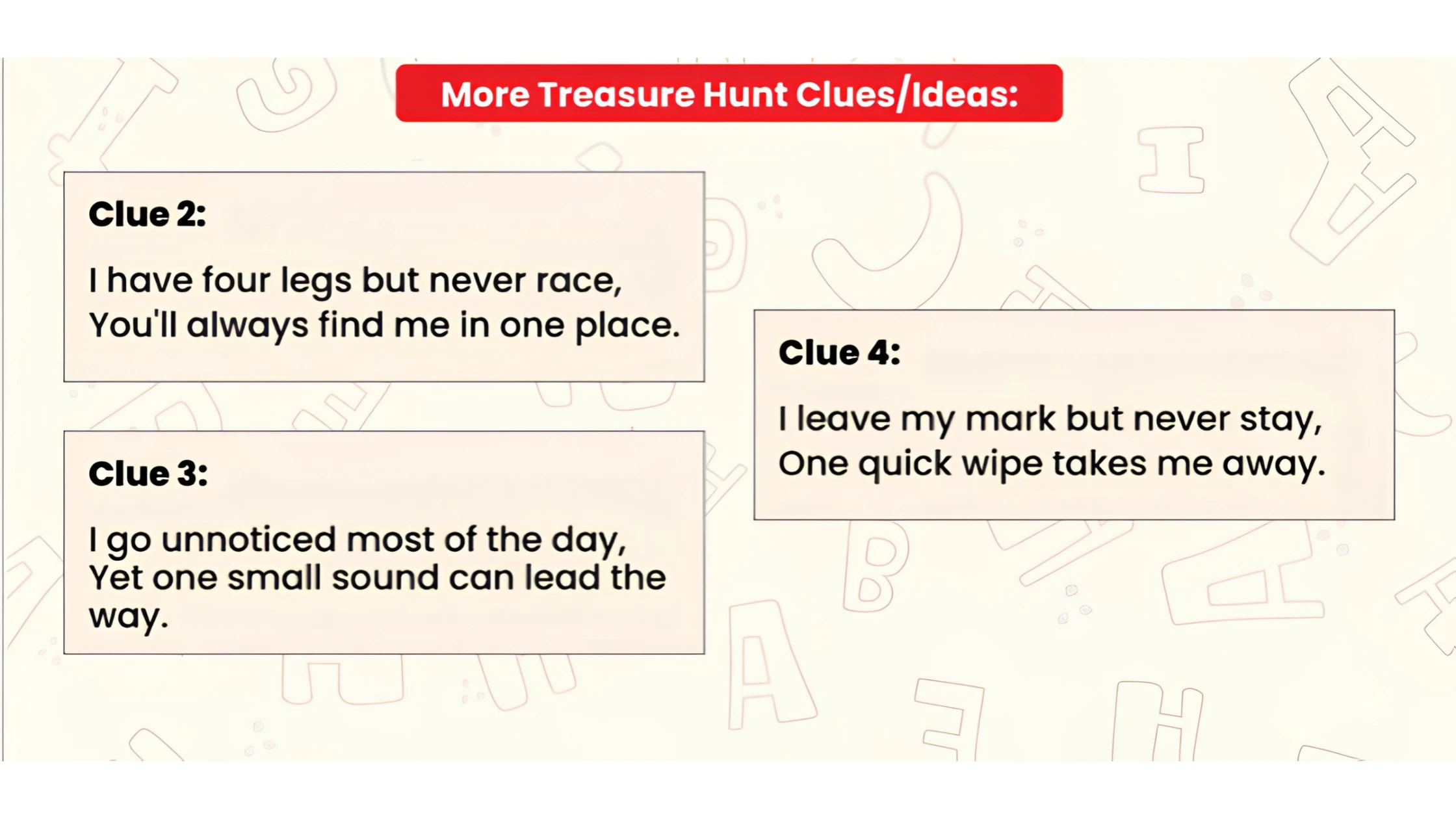
With Word Treasure Hunt, students go on a hunt around their classroom or school to find objects that match the clues. This engaging activity brings a sense of adventure to vocabulary practice and helps children observe the world around them more closely.
The activity can be adapted to suit different age groups. Younger children might enjoy picture-based clues, while older students can explore more challenging descriptions, sounds, and word meanings.
It’s also an opportunity to connect vocabulary with real-life objects, helping students understand how language relates to the things they encounter every day.
Skills developed: Vocabulary, phonics, observation, listening comprehension, and problem-solving.
Ready to Make Vocabulary Learning More Fun?
From connecting words and solving clues to creating stories and exploring the classroom, these six games offer plenty of opportunities to make vocabulary practice more engaging.
Use them during English lessons, as short classroom activities, or at home to give students more opportunities to practise their language skills. Choose activities that suit your students’ ages, learning levels, and interests to make learning new words more enjoyable!
Our 6 Fun Vocabulary Games for Students resource brings all six activities together, with complete instructions, examples, and classroom tips to help you get started.
Want to know how to play all six games?